Thursday, July 18, 2013

Time To Plant for Fall


Most people don't realize that gardens are a year round deal.  Typically we think that we plant in the spring and then that's it.  If you miss the spring planting, you have missed the boat and have to wait until next spring for a garden.
THAT'S NOT TRUE
Gardens are year round.  There is a vegetable you can plant every single month out of the year.  Even in the hottest month of summer and the coldest month of winter.  Especially here in the desert.   As a matter of fact, some summer plants prefer the coolness of fall or winter over the blistering desert heat.  And late plantings might thrive by missing the bug infestations of early summer.  It doesn't get so cold in the high desert that certain winter varieties can't make it either. Even in Vermont you can have a garden in the middle of winter.  Carrots for instance, love to be covered in snow and it ev en makes them taste better.
So now that it's summer, that means it is time to start planning your fall garden.  The first thing to be aware of is how long it takes your veggie to mature.  Here in the desert, you only want short-day varieties.  Short day refers to the amount of (ironically) darkness the plant gets exposed to.  The more darkness, the better these varieties do at flowering.  Scientists used to believe that it was the amount of light the plants were exposed to that caused flowering, but discovered it is the darkness.  However, the short/long day designation stuck.
Short day plants are also quick growers.  Just like very cold places like Vermont, we in the desert have short growing seasons.  In more moderate climates, there is three growing periods: spring through mid-summer,  mid-summer through early fall, and late fall through winter.  In the desert, we have four growing periods: spring, summer, fall, winter.  This makes the amount of time we have to grow plants much shorter.  For the most part, a plant started in march doesn't have until July to grow.  It needs to be done by the end of May.  Plants that do good in cold areas usually do good in the desert.
You can start planting fall varieties next month.  July is just WAY too hot in the desert for sensitive plants like carrots, radishes, beets, etc.  However, August has usually cooled down and is humid enough for these plants to spring up happily so that by the time fall rolls around you have tons of fall plants for harvest.
 Baker Creek Heirloom Seed Company is currently offering 25% off seed purchases with the code FALLGARDEN13

Wednesday, July 17, 2013

Giveaway!


I have had the fortune to be given three copies of Joel Salatin's CD Getting Your Hands Dirty: How to Teach Your Children to Love Work.  I'm going to keep one and figured why not share the love?  Three winners will be chosen to receive one of these. Keep reading to find out how to enter to win...


Getting Your Hands Dirty: How to Teach Your Children to Love Work.  In this practical lecture, world-renowned entrepreneur Joel Salatin shares keen insights into getting your children to love work and to embrace your family's vision for entrepreneurship. Salatin explains that children tend to rise to the expectations set for them, and he encourages parents to integrate them into every aspect of the family business from the financial and business side, to the day-to-day implementation; to give them a personal stake in the process; to praise their successes; and to create a joyful atmosphere of family labor. Salatin offers great advice for parents to eliminate dawdling, cultivate persistence, and stimulate innovation in their children.

To enter to win:

1) Like Flip Flop Ranch on Facebook
2) Sign up to follow our blog (via email, bloglovin', Google +, etc. options on right sidebar)
3) Leave a comment below as well as a way to contact you if you are the winner

The three winners will be chosen at random from all entries on Friday, July 26th.
GOOD LUCK!

Tuesday, January 15, 2013

Learncations

So the new in thing is Learncations, I have learned.  I have got to be the nerdiest farmer in the world so just hearing the word, I already believe this is a totally awesome concept.  What could be more fun than going somewhere cool and learning something?  See, I told you I was a nerd.


But seriously!  Talk about more bang for your buck.  Isn't there something you want to learn?  Something you've just been dying to learn, but it's not quite important enough to schedule time for because you have so much else to do?  Like learning to crochet or train a killer whale or be a trapeze artist?  Okay, I don't really want to do the trapeze thing, but training a killer whale would be mind-blowing (see the pun there? whale...blowing-ok forget it).


Except I would probably get eaten by a killer whale, so maybe I'd just learn crocheting.

That penguin would be me

If I was going to take a learncation, I would probably actually go to another farm to see what the competition is doing and try to learn how to do it so I could offer it to guests because I am a total capitalist.  But seriously, what a great concept.  People today are obsessed with learning.  And with good reason.  Afterall, you can't even get a job at McDonald's anymore without a college degree.
I got my doctorate and became a farmer.  Glad I didn't stop at a bachelor's.
Plus, learning is so much fun when you're not learning for an exam or learning for work.  You're just learning for fun's sake.  And a learncation means you're learning someplace cool, someplace new.  I mean seriously, think of all the cool places you could learn underwater basket weaving?


We want to make our farmstay into a real learncation.  So many other guest ranches and similar vacation places have the stupidest activities like tye-dying shirts.  Really?  What does that have to do with farming?
Okay well maybe if you tye-dye your chickens
We want people to REALLY learn what farm life is really like.

Minus the excruciatingly hard work, long hours and freaking out about paying the bills as the food nazis try to shut you down at gun point

We want to preserve farming as a way of life and try to encourage others into farming.  What better way than to do it in the form of a learncation?


Sunday, January 13, 2013

What do horses and farms have in common?

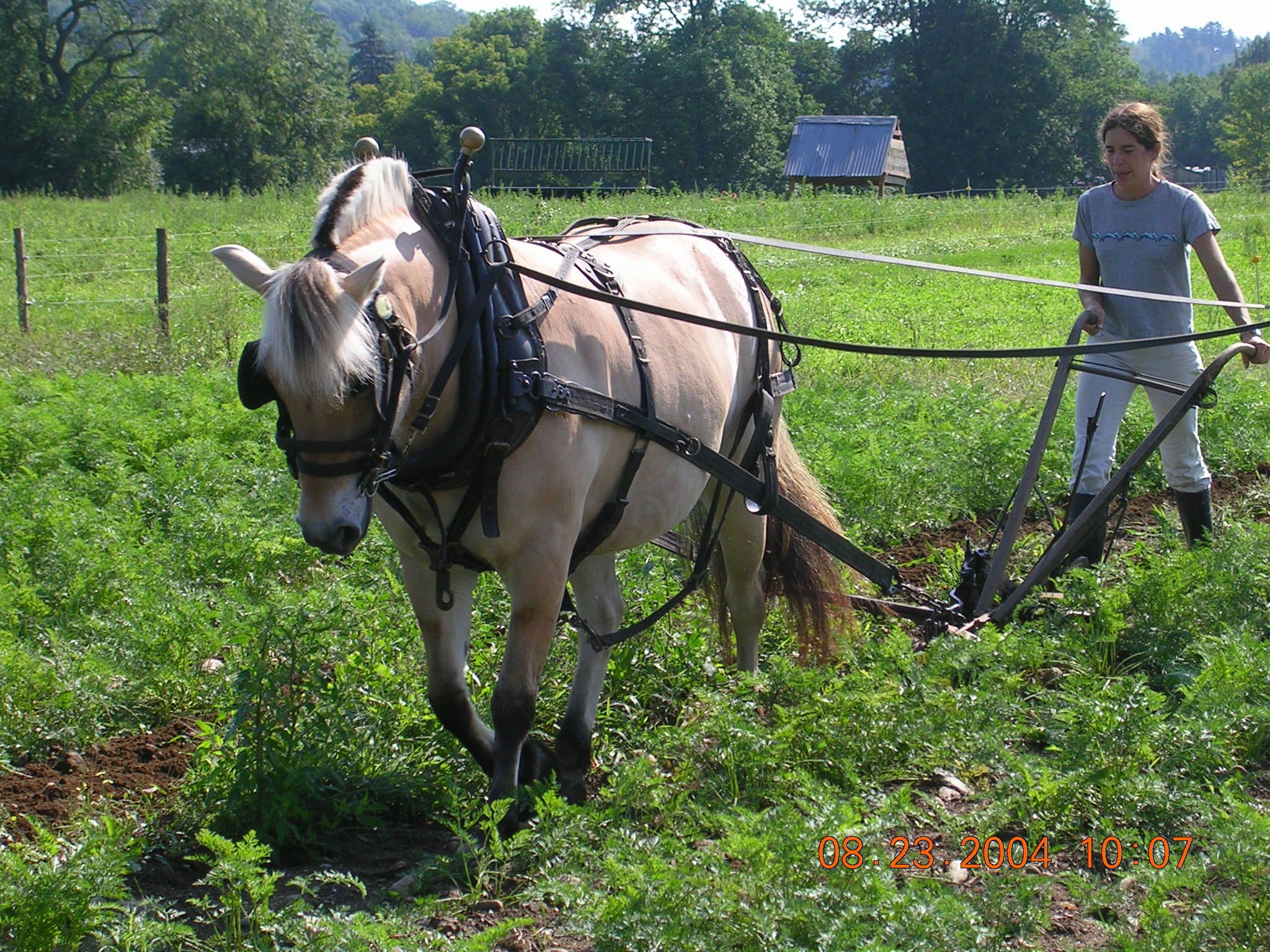
A wonderful fan asked me why I keep mentioning horses in a blog about farming.  Well first off, this is a blog about my family farm and we have horses.  Good enough for me.  However, horses and farms go together like peanut butter and jelly.  Horses were the original John Deere.  As a matter of fact, I want to get a draft horse and name him John Deere.  Wouldn't that be hilarious?  Horses plowed and cultivated and turned the hay and baled it...and then ate it too.

Horses worked the farms from the beginning of time until about the 1950s when most farmers finally abandoned horses for the faster and more powerful tractors.  During the 20s to 50s, there was a huge debate over which was more economic-tractors or horses and mules (a good recent book on the subject is Mule South To Tractor South, by George B. Ellenberg, Univ. of Alabama Press, 2007).  The experts never actually agreed on which was better, but tractors were new and cutting edge and society was rebelling from what was traditional-yes, even farmers had a hippy movement.

The younger farmers wanted tractors and they were go to use them no matter how much more they cost than horses.  Horses were sent off to the butcher and not because tractors meant less work, but really because horse-based farmers were afraid they wouldn't be able to compete.  The government did a whizbang job of convincing everyone that tractors were necessary.  So farming changed.  Hedges that preserved valuable flora and fauna had to be pulled out to accommodate big tractors, a problem the government is now trying to fix as it's leading to extinction and pest problems.  Pest problems caused an increase in the use of pesticides, farmers had to learn to be mechanics, the death rate skyrocketed with the use of heavy machinery, and the problems and inefficiencies go on and on.

Now don't get me wrong.  I'm a horse owner and there is pros and cons to everything.  Tractors can definitely do WAY more work in a day than a horse and farmers don't come home nearly as tired.  Horses run away sometimes when scared and tractors don't (although they can certainly run away and do from handler error).  The biggest con about horse farming is you can't make as much money.  Right?  I mean isn't that true?

Hmmmm


According to a research study done, amish farms are one of the fastest-growing segments of the U.S. farm community.  The study cites tons of research proving that small, diversified Amish farms, using traditional farming methods and draft horses, or mules, as a major power source, are surprisingly successful, sustainable, and profitable.


Consider what one blogger wrote:

Amish farmers are buying farm land that can cost them ten thousand dollars per acre or sometimes more, and paying for it with horse farming. And because of their religion, the Amish do not accept farm subsidies that keep many “modern” farms “profitable.” Facing these facts, it is very difficult to see how economists or agribusiness experts can claim that farms using horses or mules for motive power are any more backward, or any less profitable, than farms using tractors.


Saturday, January 12, 2013

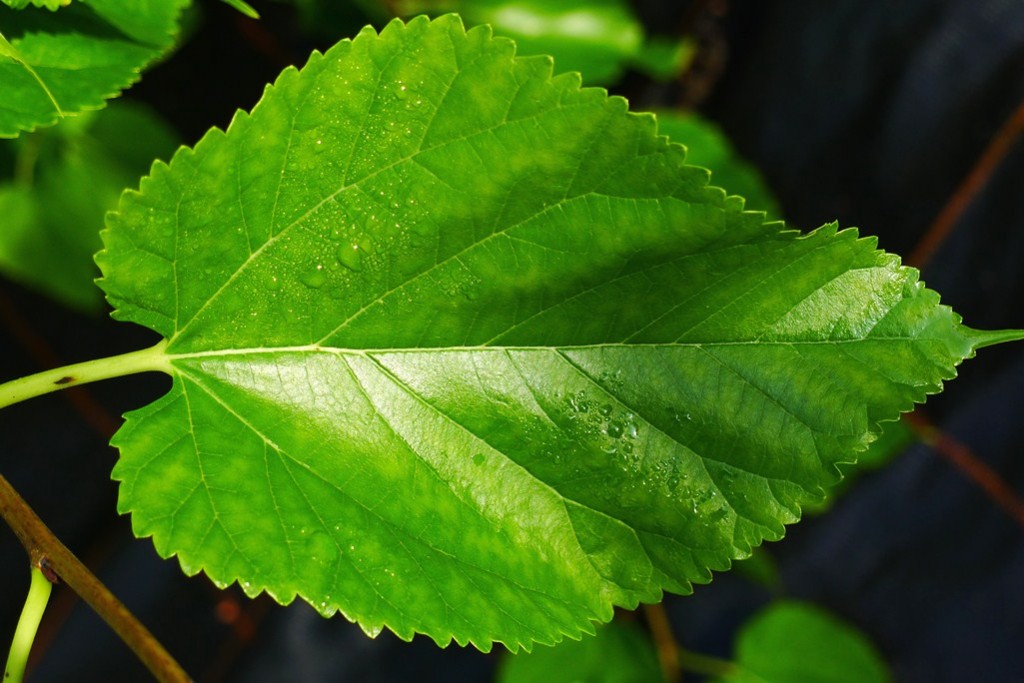
Are mulberry leaves poisonous?

I posted in a previous blog that mulberry leaves are poisonous, but when challenged by one of my readers I decided I needed to research this subject.  I'd always been told that dried mulberry leaves were poisonous.  Although I've never had any problems with my livestock, they refuse to eat dry mulberry leaves so I had no proof either way.
http://www.fao.org/ag/AGA/AGAP/FRG/Mulberry/Papers/HTML/Mulbwar2.htm

Mulberry: an exceptional forage available almost worldwide! states that the leaf mineral content is high and no anti-nutritional factors or toxic compounds have been identified.

Mulberry leaves as sheep feed supplement discusses a study that was done to figure out the nutritional content of mulberry leaves.  In this study, they dried the mulberry leaves and then fed them to sheep.

So it looks like mulberry leaves are perfectly safe even when dry!  On top of all this, the leaves are full of protein and rich in nitrogen, sulphur and minerals.  Mulberry leaves caused increased body weight gains in growing lambs and goats, and also included milk production in goats.  Some authors even say that mulberry leaves are as good as alfalfa and other high quality forage.  Therefore, my conclusion is mulberry leaves are not poisonous.  Instead, they make excellent feed fresh or dry!!


Mulberry Tree Cuttings

I wrangled Farmer Thomas into helping me make some tree cuttings today.  Afterall, what are brother-in-laws for?

 Cuttings are branches of a plant, in this case a mulberry tree, that you use to propagate another plant from.  You can cut the branches with or without leaves.  We needed to prune our mulberries anyways and there's less work that needs to be done in the winter, so we decided to do winter pruned branches.

You don't need to use rooting hormone.  Mulberries have a great success rate without the hormone, but if you are a bit paranoid (especially when doing as many cuttings as we did), then feel free to use it.  


Poor Thomas had to pickaxe his way through the soil so we could plant.  Luckily it wasn't frozen.


Some of the visitors to our farm helped us cut the branches into two foot sections (see how many we did!).


We dipped the end of the branch in rooting hormone, making sure at least one node got covered.  A node is the little bump that the new branches come from.  When these are underground, they form roots instead of branches.  Make sure at least 2 or 3 nodes get buried underground.


We planted them in lowered beds to make it easier to get water to them (we're in the desert remember).  The sticks were planted about a foot apart diagonally in a 1 2 1 2 pattern like this  -=-=-=-=-=-  Hopefully they'll all grow and then we'll dig them out and transplant them in various spots around the property and we will soon have the shadiest farm in the desert!  Plus mulberry leaves are very nutritious for livestock as the trees collect minerals from the ground and deposit them in the leaves.  Just remember that when mulberry leaves die, they become poisonous  (Looks like I am wrong about this.  I've always been told they were poisonous, but please read this blog post about how wonderful th leaves are even when they are dry!). We've never had an animal-even the goats- try to eat dead leaves as the poison makes them bitter, but keep it in mind.  You can also get fruiting mulberries which are yummy, but can be messy.  We have fruiting mulberries planted over the poultry areas so the birds will eat them when they fall off the tree.  Have fun planting!


Tuesday, January 8, 2013

Seriously good banana muffins

These muffins were REALLY good.  My family forces me to keep baking them and they're really easy too.


Directions


  1. Preheat oven to 375 degrees F (190 degrees C). Lightly grease 10 muffin cups, or line with muffin papers.
  2. In a large bowl, mix together 1 1/2 cups flour, baking soda, baking powder and salt. In another bowl, beat together bananas, sugar, egg and melted butter. Stir the banana mixture into the flour mixture just until moistened. Spoon batter into prepared muffin cups.
  3. In a small bowl, mix together brown sugar, 2 tablespoons flour and cinnamon. Cut in 1 tablespoon butter until mixture resembles coarse cornmeal. Sprinkle topping over muffins.
  4. Bake in preheated oven for 18 to 20 minutes, until a toothpick inserted into center of a muffin comes out clean.
Let me know if you try the recipe!